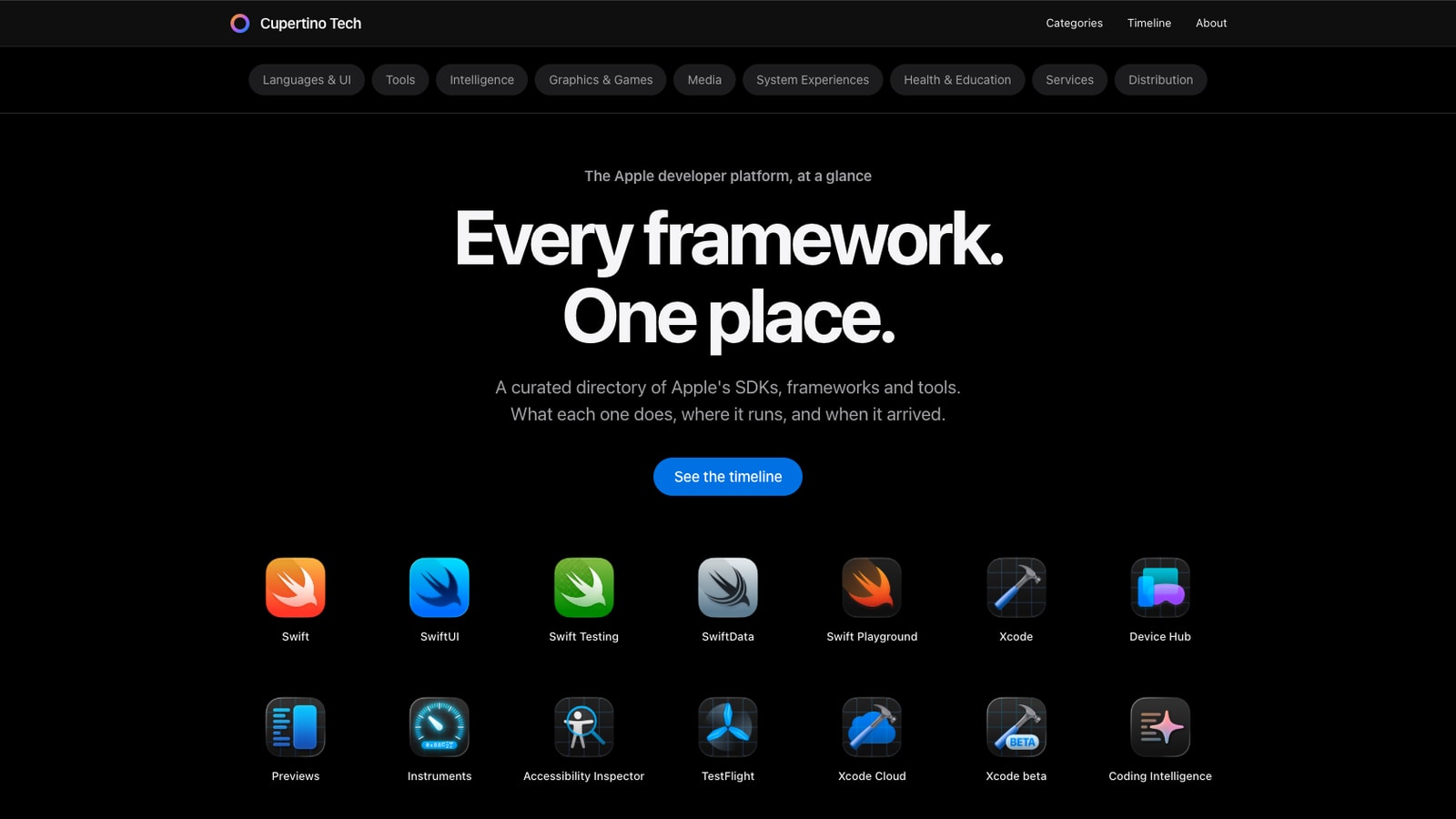
Re: You don't need .glassEffect(): Native SwiftUI in iOS 26, Cupertino.tech & SwiftFairy
Hi everyone,
Welcome to issue 106 of Not only Swift!
As I am writing this intro, one of my coding agents (Antigravity with Gemini 4 Argon) is busy implementing a feature on a Keynote replacement that I built over the course of the past few days. It all started out harmlessly enough with me wanting to “just” build a skill that can generate animated isometric diagrams. Little did I know that this would quickly escalate into a project that brings together the best of Keynote (Magic Move), Markdown, and being able to directly project the screen of any connected iPhone (or Simulator) onto a slide. No more switching back and forth between apps when you want to give a quick demo.
If you’d told me just a year ago that we’d be able to build complex interactive tools to solve our own problems in just a few hours, I’d have laughed out loud. But these days, anything seems to be possible.
Later this week, I will be putting my new presentation software to the test at DevFest Hamburg, where I’m giving a talk on giving Sherlock Holmes a voice with Gemini (TTS) - wish me luck! And if you see me there, come say hi! I might have some Firebase swag with me… 🧦 🔥
When Margaret Hamilton wrote the software for the Apollo Guidance Computer, the thought of computers writing software couldn’t have been further from reality. The photo of her standing next to the printed listing of the code she and her team wrote has become iconic, and the idea of writing a massive codebase entirely by hand seems almost unfathomable today. Our computers spit out more code in a few seconds, and even a simple npm install fills your disk with more code than the Apollo Guidance Computer or even the Space Shuttle’s computer could ever hold. Margaret Hamilton is credited with coining the term “Software Engineering”, and we owe her a great deal. Margaret passed away on September 30, 2026, at the age of 90. I included a site that beautifully honors her legacy - definitely take some time to explore it.
Cheers,
Peter
Sponsor this newsletter: Reach 1,960+ Swift and Apple platform engineers with your product, project, or event.
View available dates →
Majid explains how to use AsyncSequence to process a continuous stream of data.
In addition to being nicely integrated with Swift’s Structured Concurrency, AsyncSequence (especially when paired with Swift Async Algorithms) allows you to use operators like debounce, map, and others to conveniently implement powerful features that would require writing dozens or hundreds of lines of imperative code otherwise.
I wish every coding agent read this paragraph from Sarun’s article:
You don’t need to add glassEffect() or change the existing code to see the difference.
This is a nice side-by-side comparison of the key SwiftUI views on iOS 17.5 vs iOS 26, and it nicely shows that it pays off to use the built-in native UI controls rather than owner-drawing them.
On September 28, a routine 2-line configuration cleanup removed a legacy kill-switch flag in Google Analytics for Firebase. Because the iOS SDK didn’t check for nil when parsing that flag, apps across the world experienced a one-time crash on launch.
The postmortem breaks down what happened during the 2-hour incident and what the team is doing to harden SDK payload validation, pipeline checks, and phased rollouts.
Now, you might be wondering why we didn’t detect this outage earlier than the 20 minutes it took us to get alerted (and why the status dashboard stayed green). Well, the blog post also explains why this kind of issue was so hard to detect from the backend alone: from the server’s perspective, requests were answered with zero errors, while the payload itself caused the clients to crash on launch.
The team has been hard at work fixing this particular issue (tracked in GitHub issue #16728) as well as auditing and resolving other related issues across the codebase (which you can see in the closed issues on the Firebase iOS SDK). A great reminder of the subtle traps in client/backend contracts!
SwiftFairy is an interesting entry into the market of agentic coding tools. It originated from Matt’s attempts to turn all the knowledge that he and Natalia captured in their books and articles.
When it turned out that coding agents didn’t pay (enough) attention to the guidance in those skills, Matt started building SwiftFairy.
It’s a static code analyser with a plugin system that you can connect to your coding agents via an MCP server it provides.
Communicating clearly is important for anyone in tech. This article by Michael Lynch advocates for a self-contained and concise writing style: cut out the fluff, focus on the key message of your piece, and provide all information required (but no more than that).
I think this works great for technical posts, but keep in mind that other types of writing (e.g. opinion pieces, or stories in general) require a different style.
While this article is focused on North American society, much of it translates well to other cultures.
For the longest time, I thought that spending less time with friends was simply an inevitable byproduct of growing up and naturally seeing people less (such as at school or university). However, there are other factors at play as well: less available time, technology making solo entertainment easier than ever, and the fear of social awkwardness.
A while ago, my wife suggested we invite some students over from the nearby residence hall. I was very skeptical at first (“Won’t they think we’re weird?”), but what started out slowly - we literally had only two guests on the first evening - has now become a regular routine, with attendance growing to about 20 people each time.
Throwing a dinner party for a large group like that is definitely a logistical challenge (we try to accommodate any allergies and diets we know about) and a lot of work, too. But seeing students from all over the world mingle, connect across cultures, and share their stories is incredibly rewarding and fills me with joy and energy every single time.
The great disinvitation is real - but you can push back against it. Start small, you might be surprised where it takes you.
Margaret Hamilton coined the term “Software Engineering” - to illustrate the importance of the work she and her team did on the Apollo Guidance Computer.
The photo of her standing next to the printout of the AGC program is iconic - even more when you consider that all of it was humanly written.
Margaret Hamilton died at the age of 90 on September 30, 2026.
Along with many other contributions by other women, giving a name to a concept has had a long-lasting and profound impact on the way we build computer systems today.
This site provides an interactive overview of Margaret’s life and her contributions to the field of Software Engineering.